Four ways to sell. One ledger.
A counter sale, a salesman's visit, a satellite outlet and an order placed in the partner app are different days for the people involved. They should not be different systems.
Counter billing
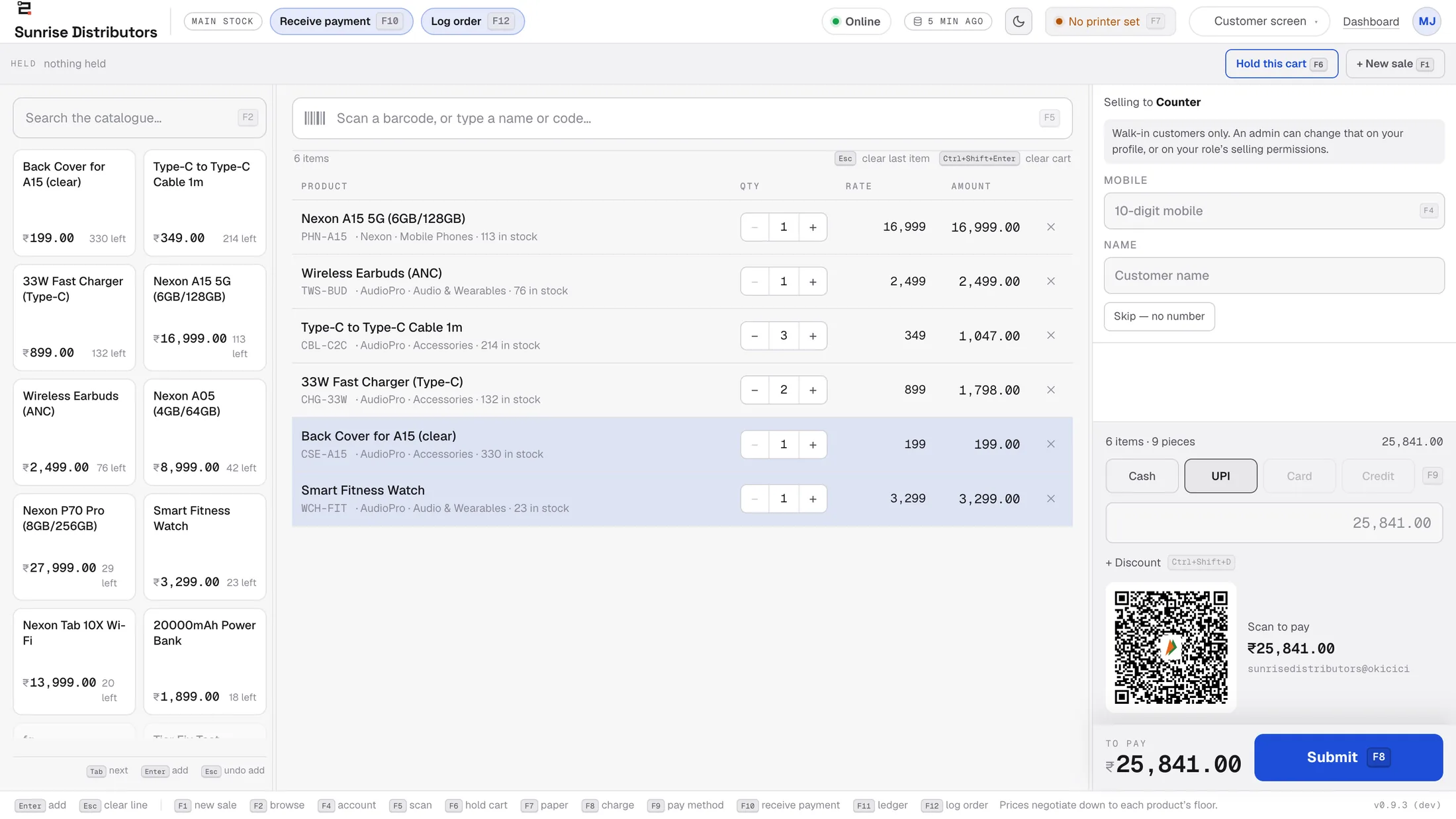
A till that needs no new hardware: it runs in the browser on the machine already on your counter, keeps selling when the internet drops, and sends everything through when it comes back. The customer sees the bill on their own screen and pays by scanning the code beside it. It has a page of its own.
Collections and credit
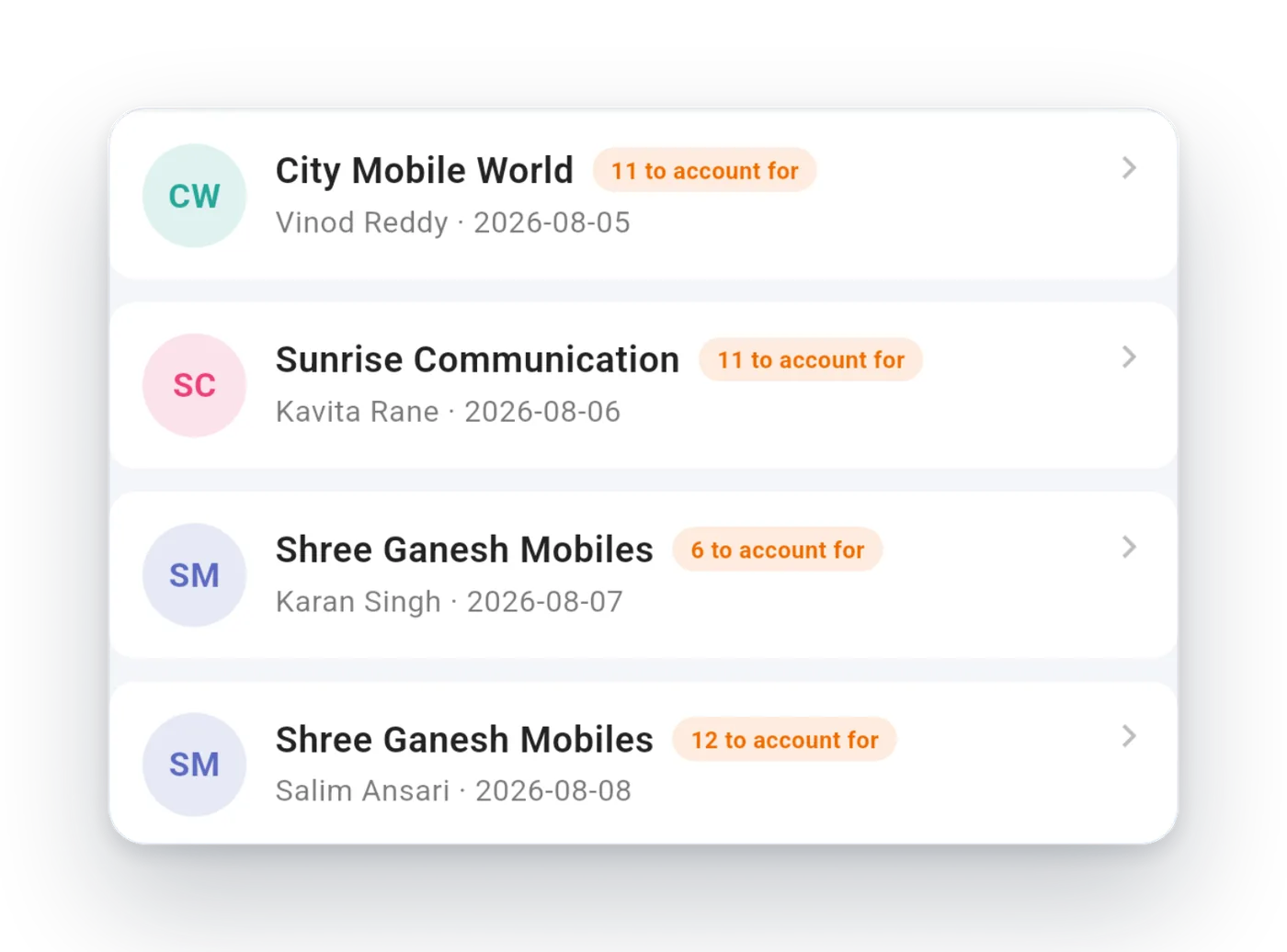
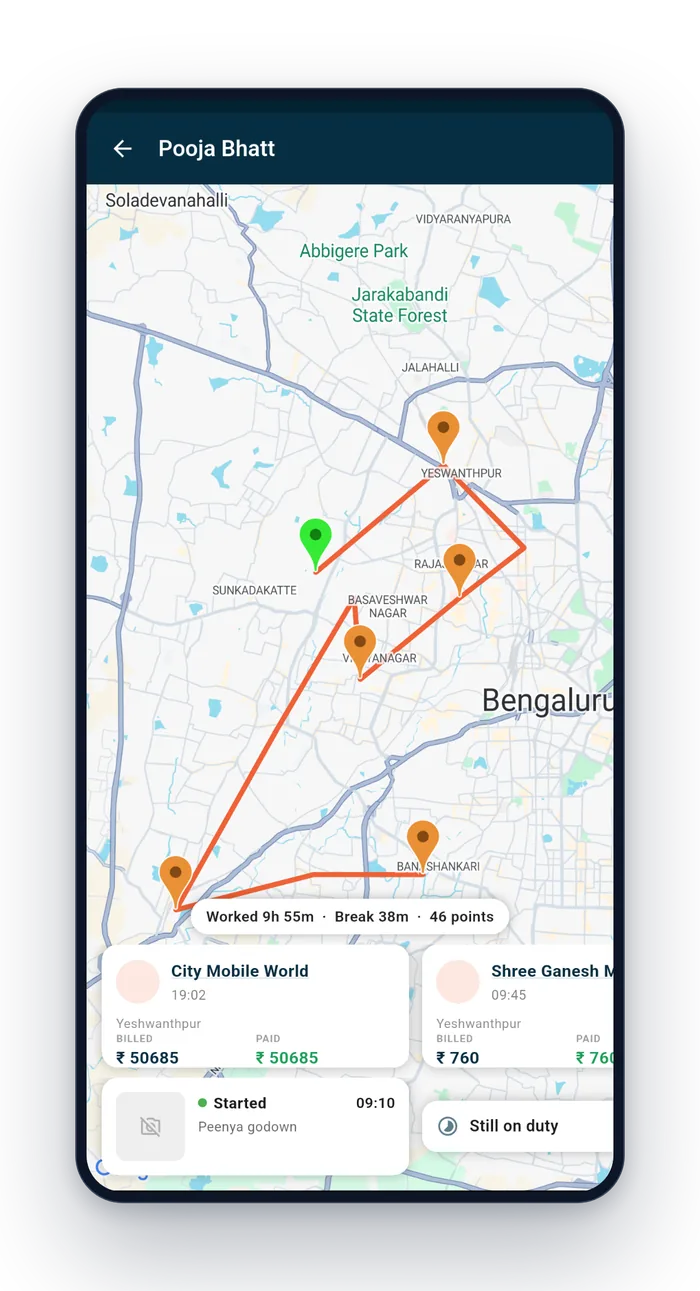
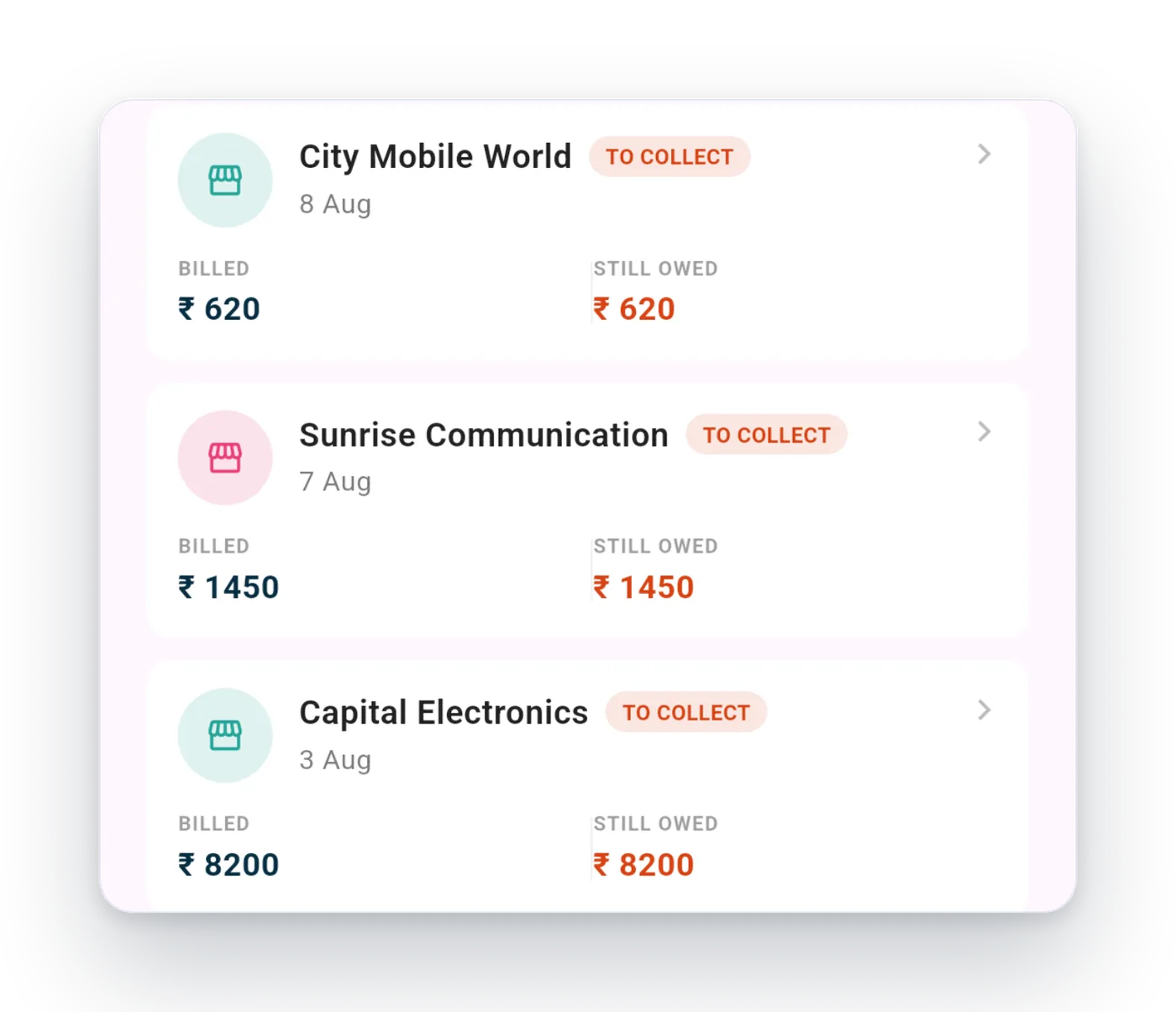
Who owes, how much, and how long it has been waiting — against the customer, and against the staff member holding cash they have not settled yet. Take cash or UPI in the field and the ledger moves as you do.
- Counter POS that keeps selling with the internet down and reconciles when it returns
- Field sales confirmed by a one-time code at the customer's door, so the bill is agreed on the spot
- PDF receipts for every kind of order, each carrying a QR that opens the record
- Money booked three ways — what the customer owes, what the staff member holds, and an append-only transaction log
- A reconciliation command that audits all three against each other and reports the drift
Counter
At your own shopWalk-in sales on a live till. It keeps selling when the internet drops and reconciles when it comes back.
Field
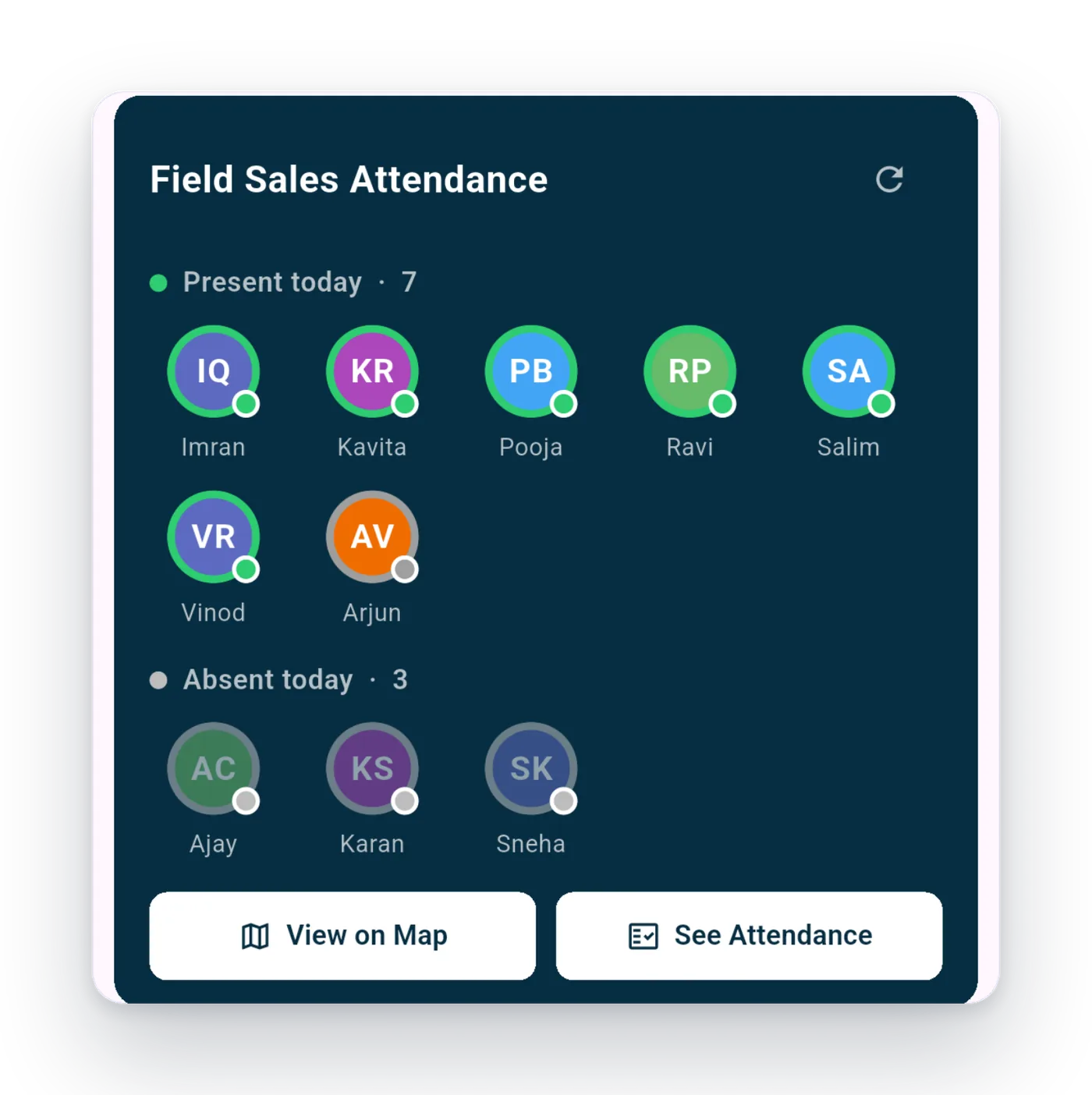
At the customer's doorA salesman sells from the stock in their bag, and the customer confirms the bill with a code before they leave.
Outlet
At a satellite counterA second shop selling from its own stock, or from yours. Which one is a setting, not a different install.
Online
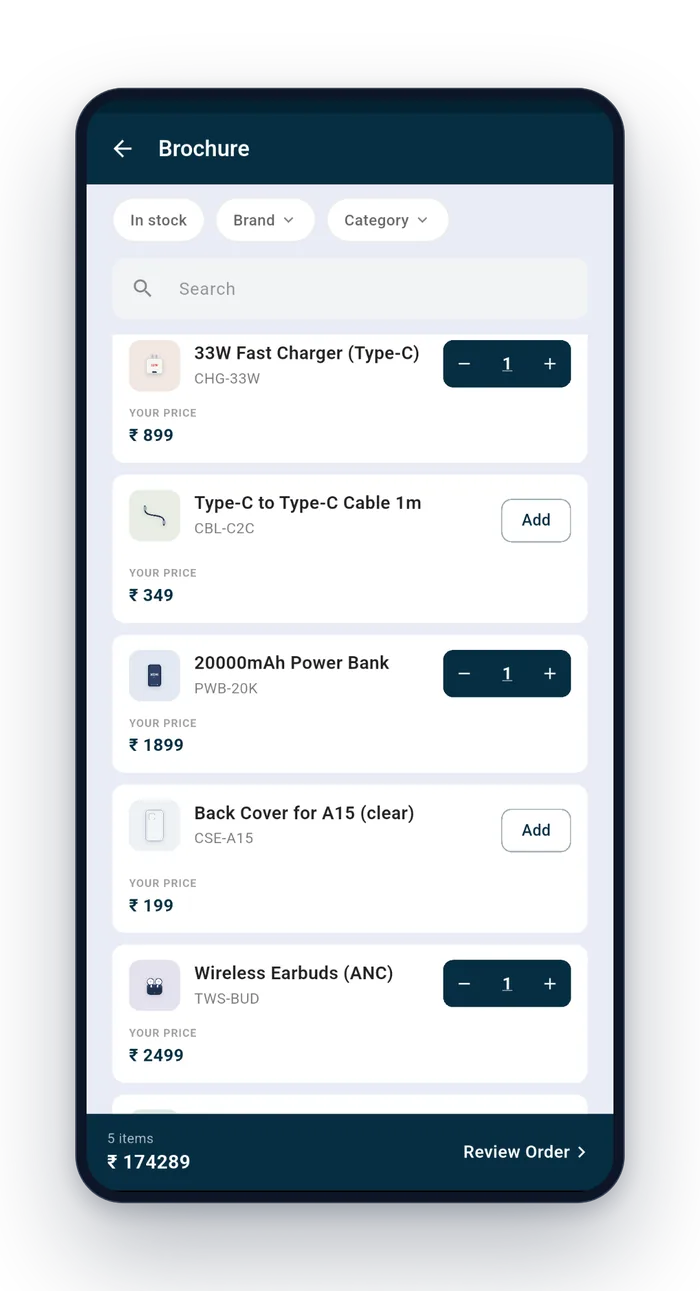
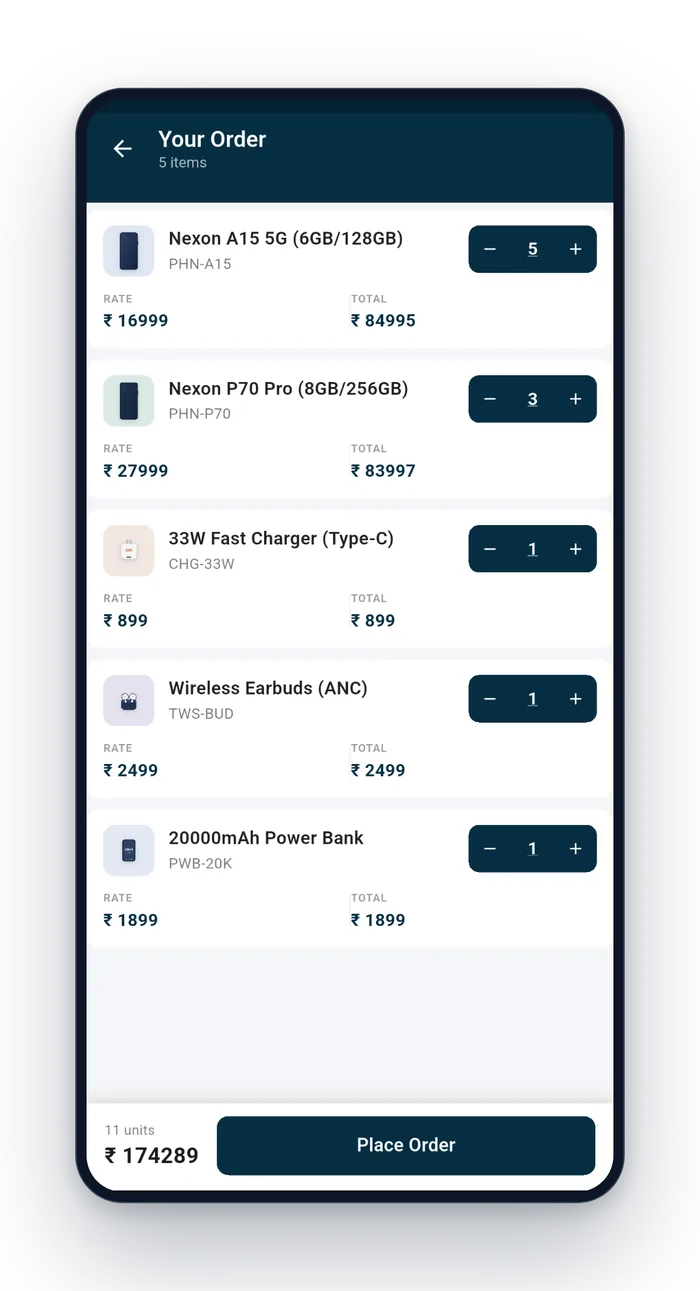
In the customer's own appTrade customers order for themselves, at their own prices, without ringing anybody.